

About SOHAPI
Bear Spray Manufacturer
SOHAPI is a dedicated bear spray manufacturer based in Japan, supplying distributors, outdoor retailers, safety equipment wholesalers, and private-label brands across North America, Europe, the Middle East, and Southeast Asia.
What We Make and Who We Supply
We've been doing this since 2010 — not as a side line of a general aerosol factory, but as a focused operation built specifically around bear deterrent products.
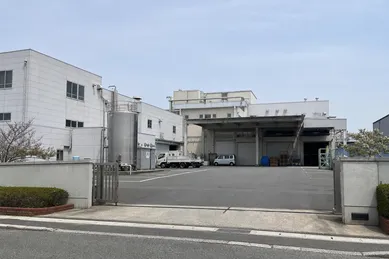
Our facility covers 15,000 square meters. We run 8 production lines with 200 employees and ship 500,000 units per year. Every unit that leaves this building — whether it's a standard retail canister, a foam-dispersal variant, or a private-label SKU with your branding — goes through the same production and inspection process.
We sell factory-direct to international buyers. No middlemen, no trading company markup. When you place an order with SOHAPI, you're dealing with the people who actually make the product.
Product Range

Who We Supply
How We Got Here
The early years were mostly about getting the formulation right. Capsaicin concentration, carrier chemistry, and spray pattern consistency are not problems you solve once and move on from.
SOHAPI launched with a narrower product range and a smaller floor. The founding focus was formulation: capsaicin concentration, carrier chemistry, and spray pattern consistency — problems that require sustained engineering attention, not one-time solutions.
We kept running into the same issue that plagues aerosol manufacturing: fill weight variance across a production run. A canister that's 5% underfilled doesn't just fail a spec — it fails a user in the field.
The fix: We rebuilt our filling line around automated gravimetric control to close that gap. It's been the backbone of our QC process ever since.
As North American and European buyers started sourcing directly from Asia, export demand pushed us to scale. We added lines, expanded the facility, and built out our in-house R&D team to handle the customization requests that come with private-label work.
By the time we hit our current capacity, the infrastructure was already in place — we weren't scrambling to catch up with orders. 15,000 m² facility, 8 production lines, 200 employees, 500,000 units per year.

Fill weight variance is the core quality problem in aerosol manufacturing. A canister that's 5% underfilled doesn't just fail a spec — it fails a user in the field. Our gravimetric filling system is the backbone of our QC process.
No middlemen, no trading company markup. When you place an order with SOHAPI, you're dealing with the people who actually make the product.
Inside the 15,000 m² Facility
A walkthrough of how the production floor is organized — and why the sequencing decisions we made early on still protect your order quality today.

Walk through the front of the building and you're in formulation. This is where we blend the active capsaicin compound with the carrier and propellant system. We control concentration at this stage — not at the end of the line — because catching a batch variance here costs us an hour, not a container.
The filling hall runs 8 lines. Each line handles a specific canister format — we don't mix formats on a single line mid-run, because changeover introduces the kind of fill-weight drift that shows up in your returns. That's a lesson from early production runs we'd rather not repeat.
Gravimetric Fill Control
Automated gravimetric fill control keeps each canister within ±1g of target weight across the full run — not just at the start of a batch.
Formulation Zone
Capsaicin compound blended with carrier and propellant system. Concentration is controlled here — upstream of filling — so batch variance is caught before it reaches the line.
Filling Hall
8 dedicated lines, each assigned to a specific canister format. No mid-run format mixing. Valve assembly and crimping happen inline with torque-controlled automated equipment.
Packaging & Dispatch
Retail-ready blister packs and bulk export configurations. North America and Europe buyers can receive shelf-ready containers with EPA registration text, bilingual requirements, and UPC pre-applied.
Automated Crimping Eliminated the #1 Leakage Source
A hand-crimped valve is the single most common source of leakage complaints in aerosol products. We use automated crimping equipment calibrated to the valve manufacturer's torque specifications — and we eliminated that variable years ago.
Every crimp is logged. If a torque reading falls outside tolerance, the line stops and the affected units are quarantined before they reach the next station.
0.03%
Leakage rate across shipped units (trailing 12 months)
100%
Crimps logged with torque data per production run
±0.5 N·m
Torque tolerance window on automated crimp equipment
<2 min
Quarantine response time when out-of-tolerance crimp detected
Capacity You Can Plan Around
Annual Output
12M+
Units per year across all canister formats
Concurrent SKUs
Up to 8
Different SKUs running simultaneously across filling lines
Lead Time (Standard)
6–8 wks
From confirmed PO to container-ready for established SKUs
Minimum Order
5,000
Units per SKU for standard production runs
On-Site Warehousing
Finished goods warehouse holds up to 90 days of buffer stock for repeat buyers on standing orders. We don't push inventory risk onto you — if you're running a replenishment program, we can hold your allocation and release on your schedule.
Available for buyers with annual volume commitments of 50,000+ units.
Temperature-Controlled Storage
Aerosol products are pressure-sensitive. Our warehouse maintains a controlled temperature range year-round — relevant for buyers shipping into markets with extreme seasonal temperature swings, or where port dwell times are unpredictable.
Storage conditions documented and available for inclusion in your product dossier.
How We Catch Problems Before They Reach You
Quality control at SOHAPI isn't a final inspection step. It's built into the production sequence — because a defect caught at the end of the line is still a defect that consumed materials, time, and capacity.
The 5-Stage Inspection Sequence
Incoming Raw Material Inspection
Pre-ProductionEvery capsaicin batch is tested for SHU concentration before it enters formulation. Canisters and valves are dimensionally checked against spec. Propellant purity is verified by certificate and spot-tested. Nothing enters the line on paperwork alone.
In-Process Fill Weight Monitoring
During FillingGravimetric checks run continuously on each filling line. Statistical process control flags drift before it becomes a batch-level problem. Operators don't wait for end-of-run sampling — the system alerts in real time.
Valve & Crimp Integrity Testing
Post-CrimpAutomated torque logging on every unit. Leak detection via water bath immersion on a statistically valid sample per batch. Any unit that fails immersion triggers a full-batch hold and root cause investigation before the run continues.
Spray Pattern & Actuation Testing
FunctionalRandom samples from each batch are actuated and spray pattern is measured against the approved specification. Cone angle, particle size distribution, and range are checked. This is the test that catches valve seat issues that torque data alone won't surface.
Pre-Shipment Final Inspection
Pre-DispatchLabel accuracy, regulatory text, UPC scan verification, and carton count reconciliation. Buyers can request third-party pre-shipment inspection (PSI) — we accommodate SGS, Bureau Veritas, and Intertek without scheduling friction.
Documentation Included With Every Shipment
Certificate of Analysis (CoA)
Per batch, with SHU concentration, fill weight data, and crimp torque summary
Safety Data Sheet (SDS)
GHS-compliant, available in English, French, Spanish, and German
Dangerous Goods Declaration
IATA/IMDG compliant for air and sea freight — pre-prepared, not on request
Batch Traceability Record
Links finished goods to raw material lot numbers — supports your own QMS requirements
Regulatory Compliance Letter
Confirming EPA registration status and applicable export market compliance
Third-Party Test Reports
Available on request for buyers requiring independent lab verification of SHU concentration
Our Rejection Policy Is Simple: We Don't Ship It
If a batch fails any stage of the inspection sequence, it doesn't ship. We don't rework aerosol units and re-release them into the same order. Failed batches are quarantined, root-caused, and either scrapped or reprocessed as a separate production run with a fresh inspection cycle.
This adds lead time in edge cases. We'd rather tell you that upfront than ship you a container that generates returns six months later.
Environmental Practices and Worker Safety
Bear spray manufacturing involves pressurized aerosols and capsaicin compounds — both of which require serious handling protocols. Here is how we run the facility.
Closed-Loop Propellant Recovery
Our filling lines run a closed-loop propellant recovery system that captures propellant vapor rather than venting it to atmosphere. This is an operational necessity on pressurized aerosol lines — it also eliminates a significant emission source.
Capsaicin Handling Protocols
Capsaicin handling areas are fully enclosed with dedicated ventilation and PPE protocols. We have had zero reportable exposure incidents since implementing the current system. Capsaicin is a biologically active compound — the handling infrastructure reflects that.
Wastewater Treatment
Wastewater from the production floor goes through a treatment stage before discharge. Capsaicin is biologically active and we treat it accordingly — it does not go directly to drain.
Packaging Waste Handling
Packaging waste — cardboard, film, rejected labels — is sorted and collected by a licensed recycler. We do not have an ISO 14001 certification to point to, but the practices are in place because running a clean facility is operationally necessary, not just a compliance checkbox.

Why These Practices Exist
Pressurized aerosol lines and concentrated capsaicin compounds create real operational hazards. The systems we run — closed-loop propellant recovery, enclosed capsaicin areas, wastewater treatment — exist because they are necessary to run the facility safely and consistently, not because a certification requires them.
Buyers sourcing at volume should know that the facility they are sourcing from has zero reportable capsaicin exposure incidents under the current system. That is a meaningful data point for supply chain due diligence.
R&D and Formulation Engineering
Our R&D team is 20 people. Their primary work is formulation development and spray system engineering — adjusting capsaicin concentration, carrier viscosity, and propellant ratio to hit specific spray pattern and range targets for different product configurations.

What the Team Works On
- Capsaicin concentration adjustment to meet target market regulatory ceilings
- Carrier viscosity tuning for foam-dispersal and stream configurations
- Propellant ratio engineering for specific spray pattern and effective range targets
- Wind-resistance formulation for open-terrain deployment scenarios
- Longer effective range via stream configuration for specific OEM requirements
OEM and Private-Label Formulation Projects
For OEM and private-label buyers, the R&D team handles development work directly. If you need a foam-dispersal formula for wind-resistance in open terrain, a stream configuration for longer effective range, or a specific concentration level to meet a target market's regulatory ceiling — that is a formulation project, and we run those regularly.
Most custom formulation projects take 4–6 weeks from spec to approved sample, depending on the number of iteration cycles.
What Speeds Up the Timeline
Buyers who come in with a clear regulatory target and a reference product move through the formulation cycle faster than buyers who are still defining the spec. Worth knowing before you start the conversation.
If you have a target market's regulatory ceiling in hand and a reference product to benchmark against, the iteration count drops significantly — and so does the 4–6 week window.
Formulation Variables We Engineer
Starting a Formulation Project
To initiate a custom formulation project, contact our team via the contact page or submit a request for quote. Include your target market, any known regulatory ceiling, and a reference product if available. Our R&D team will scope the project from there.
The People Running the Lines
The formulations, certifications, and inspection protocols on this page are only as reliable as the people executing them. Here's who that is.
Chief Formulation Engineer
18 years in aerosol chemistry, with the last 12 focused specifically on capsaicin-based deterrent products. The formulation depth behind our SHU consistency and carrier stability comes from this tenure.
QC Lead
Came up through pharmaceutical aerosol manufacturing before moving into the bear spray category. That background shows in how we run our inspection protocols — tighter than most of what you'll find in this product segment.
Production Manager
Has been on this floor since 2013 and knows every line configuration we've ever run. Continuity at the production management level means institutional knowledge doesn't walk out the door between orders.

Institutional Knowledge at Every Level
The combination of pharmaceutical-grade QC discipline, deep capsaicin formulation expertise, and long-tenure production management is not common in this product category. It's what allows us to hold the tolerances we publish and deliver the consistency buyers in regulated markets require.
Shipping to North America, Europe, and Beyond
Aerosol products are regulated cargo. We've been shipping pressurized canisters internationally since 2010, which means we've worked through the documentation requirements for every major import market we serve.
Regulatory Compliance by Mode and Market
DOT Classification — North America
Full Department of Transportation classification documentation for road and intermodal freight into the US and Canada. Pressurized canister labeling, packaging, and manifest requirements covered.
ADR Compliance — European Road Freight
European Agreement concerning the International Carriage of Dangerous Goods by Road. Required for any shipment transiting EU member states by truck or rail.
IATA Dangerous Goods — Air Freight
IATA dangerous goods packaging and documentation for buyers who need air freight. Available when lead time requirements make sea freight impractical.
Container Efficiency and Order Logistics
Optimized Export Carton Dimensions
Export carton dimensions are engineered around 40HQ container fill rates. You're not paying for air. A standard 40HQ holds a specific number of units depending on your carton configuration — we've done that math so you don't have to.
Multi-SKU Consolidation
Buyers ordering across multiple SKUs can consolidate into a single shipment with separate lot documentation per SKU. This simplifies your receiving process and reduces freight cost per unit.
Production Schedule at Order Confirmation
We provide a production schedule at order confirmation and update it if anything changes — not a tracking number three weeks later when the container is already loaded. Lead times run 25–35 days for standard SKUs. Custom formulation or private-label orders add the development cycle on the front end.
Export Markets Served
Active shipping lanes with established documentation workflows and carrier relationships.

SOHAPI's Sourcing Proposition
Six reasons procurement teams and brand owners keep coming back — and why the first order usually isn't the last.
15+ Years in Bear Spray Specifically
Not a general aerosol factory that added bear spray to the catalog. Every process, every piece of equipment, and every QC checkpoint on this floor was built around this product category, so your order isn't competing with unrelated production priorities.
8 Lines, 500,000 Units Annual Capacity
Your 5,000-unit order doesn't move the needle on our schedule. You get a production slot, a confirmed ship date, and a line that isn't being reconfigured around you.
In-House Formulation R&D
Custom concentration, spray pattern, and canister format development handled internally, so private-label projects don't depend on a third-party lab's timeline.
100% Leak Testing, Every Unit
Water bath post-crimp on every canister, not statistical sampling. Aerosol leakers are a liability issue in your supply chain — we close that risk at the source.
Export-Ready Documentation
ISO 9001:2015, CE, SGS, plus dangerous goods documentation for your target market. Your import clearance process starts with a complete file, not a back-and-forth for missing paperwork.
Flexible MOQ with Full Production Standards
Trial orders run through the same lines, the same QC process, and the same documentation as full production. What you test is what you scale.

Built for the buyer who needs certainty, not promises
Fifteen years of single-category focus means our processes are tuned, our documentation is complete, and our capacity absorbs your volume without disruption. From trial order to full production run, the product you receive is the product you approved.
Contact SOHAPI
Ready to discuss a sourcing requirement or request samples? Reach us directly through any of the channels below.
Phone
270-1101Address
GRT合同会社
千葉県我孫子市布佐3275-22-206室
Send a Sourcing Inquiry
We respond to qualified inquiries within one business day.
Sample requests are available for qualified buyers. Mention your target market and required certifications in your message and we'll include the relevant documentation with your sample shipment.